
A mental age AI tool promises a quick snapshot of how “mature” your thinking seems based on your answers. It often delivers a number, a category, or a short profile that claims to reflect how you plan, adapt, and handle pressure.
That can feel personal, but it is still a simplified model built from limited inputs. The smartest way to read it is as a structured self-check, not a diagnosis, and not a fixed identity label you carry forever.



Mental Age AI Explained In Plain Language
Online “mental age” tools use familiar language, but their meaning is not standardized across platforms or methods.

In most cases, the AI is translating your responses into traits that resemble maturity, such as follow-through, flexibility, and emotional steadiness.
Some tools focus more on cognition, while others lean into personality style and communication cues. The common thread is that the label is a shortcut for a bundle of behaviors, not a literal age in your brain.
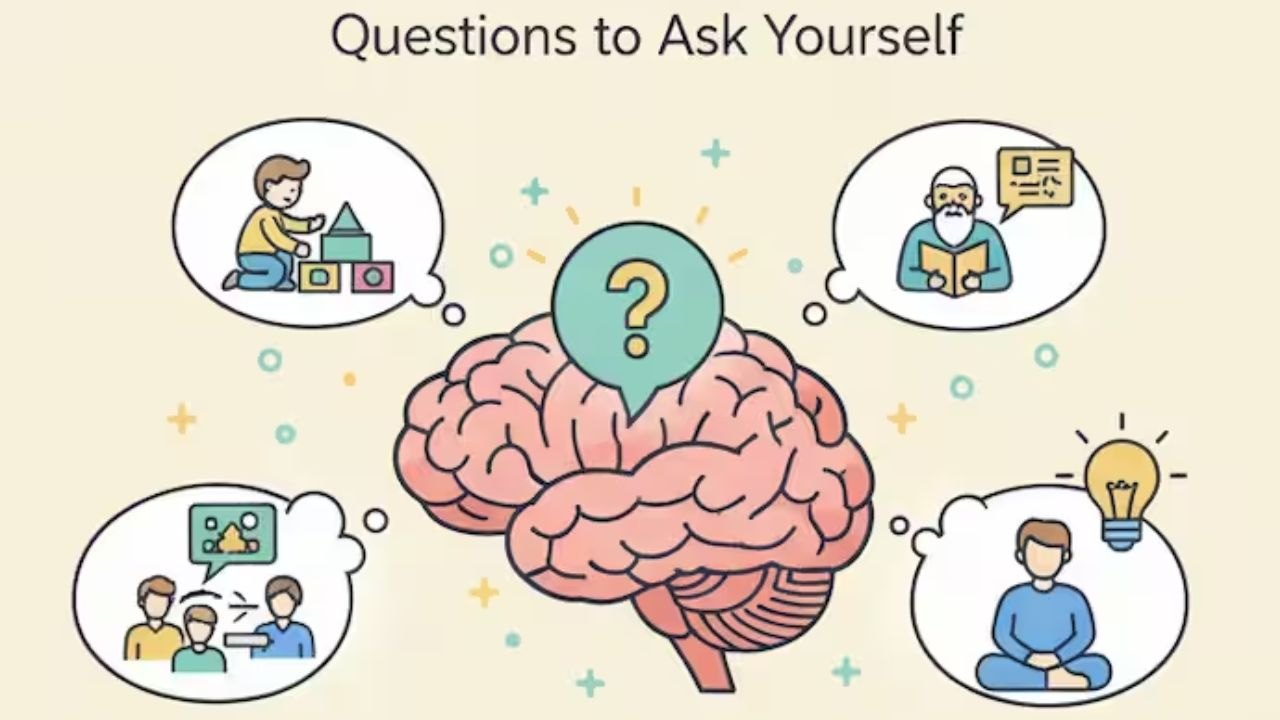
What People Think Mental Age Measures
Many people assume mental age equals intelligence, life experience, and emotional maturity rolled into one number.
They expect it to capture how responsible they are, how wise they sound, and how well they handle relationships. That expectation is understandable because the label feels simple and familiar.
In reality, maturity is uneven across contexts, so you can be very disciplined in school and less steady in conflict. A single score cannot fully represent that complexity.
What It Can Reasonably Approximate
A careful mental age AI tool can approximate patterns in your decision-making and your consistency. It may also reflect how you describe planning, how you think through tradeoffs, and how stable your reactions appear in stressful situations.
In practice, this means it often tracks executive skills such as organization and adaptability, plus emotional cues such as patience and recovery after setbacks.
When you treat the output as a pattern summary, it becomes more useful. When you treat it as a fixed label, it becomes less accurate.
What It Cannot Diagnose Or Prove
Mental age AI cannot diagnose mental health conditions, developmental disorders, or clinical impairment. It also cannot prove future success in school, work, or relationships, because real outcomes depend on environment, habits, and support.
The tool cannot fully separate temporary states, like fatigue or acute stress, from long-term traits with high confidence.
It also cannot access your full life history, values, or real behavior, so it is not a diagnosis tool in any responsible sense. You should treat it as guidance, not a verdict.
What The AI Is Really Measuring
Despite the name, mental age AI does not measure age in a biological or medical sense. It is usually scoring clusters of signals that indicate maturity, such as planning habits, impulse control, and perspective-taking.

The tool may use direct questions, language analysis, or both, then map your responses to categories it calls “older” or “younger.”
The best versions stay grounded in observable habits rather than sweeping personality claims. Your results improve when you view the tool as a mirror for patterns, not an authority.
Cognitive Habits: Planning, Flexibility, And Problem Solving
AI tools often infer cognitive maturity from how you describe prioritizing, managing time, and handling multi-step tasks. If your answers show structured planning, consistent follow-through, and thoughtful trade-offs, the tool may label your mental age as higher.
If your answers show last-minute decisions, scattered priorities, or frequent unfinished plans, you may be labeled as lower.
These signals overlap with executive skills like attention control and working memory. They are trainable habits, not permanent traits.
Emotional Patterns: Regulation, Impulsivity, And Resilience
Many mental age AI tools use emotional cues as a proxy for maturity, especially how you describe frustration, anxiety, or conflict.
Calm reflection, delayed reactions, and constructive coping often map to stronger regulation in the output. Quick escalation, avoidance, or regret-driven decisions may map to impulsivity signals.
This does not mean you are “immature,” it means the system detected patterns that often correlate with strain. Sleep, stress load, and environment can shift these patterns quickly.
Social Reasoning: Perspective Taking And Communication
A major factor in many profiles is social reasoning, which shows up in how you handle disagreement, boundaries, and cooperation.
If you describe listening, adapting your message, and considering other viewpoints, the tool may rate you as more socially mature. If you describe frequent misunderstandings, rigid reactions, or conflict avoidance at all costs, it may rate you differently.
This category is sensitive to culture and setting, because communication norms vary. That is why you should read social labels with context and caution.
How Reliable Are Mental Age AI Results
The main goal in any self-assessment is meaningful consistency, not a perfectly stable number.

Mental age outputs can shift when your mood changes, your wording changes, or the tool’s scoring logic changes.
A stronger tool tends to show consistent themes across sessions, even if the exact number moves slightly.
A weaker tool swings wildly or relies on flattering statements that could fit almost anyone. If the tool produces repeatable themes that match your lived experience, it is doing its job.
Consistency Across Sessions And Tools
If you take the same tool twice under similar conditions, the broad profile should feel similar. Small differences are normal, especially if your week was different or you answered with more detail.
Large shifts often mean the tool is highly sensitive to language, or you took it in a very different state. Different tools can also produce different results because they use different questions and trait mapping rules.
If you want consistent tracking, compare trends over time within one tool, not single scores across multiple tools.
Why Your Inputs Change Outputs
Your input is not only what you say, but how you say it and how much you say. Short, vague answers often lead to generic outputs, while long answers can cause the tool to over-weight one theme.
Mood can tilt your wording, making you sound more impatient or more discouraged than your typical self.
Timing matters because stress and poor sleep reduce cognitive flexibility and patience. For a cleaner result, anchor answers to a consistent timeframe and typical behavior.
Bias And Cultural Language Effects
AI can misread maturity cues when language norms differ by culture, age group, or personal communication style.
Direct speech may be read as confidence, while indirect speech may be read as uncertainty, even when both are normal in different contexts. Humor, slang, and second language writing can also distort interpretation.
Bias may show up as unfair assumptions tied to vocabulary and tone rather than behavior. Treat the output as tentative, then validate against behavior you can observe across settings.
How To Use The Tool Without Misreading It
A mental age AI result is most useful when you focus on repeated themes instead of obsessing over a number.

The process starts with honest inputs, consistent conditions, and a realistic interpretation strategy. The safest approach is to look for the same signals appearing across sessions and to connect them to real behavior.
You also need to protect your privacy because personal assessments can reveal sensitive details. Used well, the tool becomes a structured reflection routine that supports better decisions.
Best Practices For Clear Answers
Cleaner inputs lead to clear answers that are easier for any system to interpret. Use specific patterns instead of extreme statements and keep the same timeframe in every answer, such as the last month.
Describe frequency consistently with terms like often, sometimes, and rarely, and avoid switching between “today” and “last year.”
Do not role-play, exaggerate, or try to sound impressive because the tool may treat performance as reality. If a prompt feels unclear, add a short clarification instead of guessing.
Comparing Outputs To Real Behavior
After you get results, compare the claims to observable behavior across different settings. If the tool says you plan well, check whether you manage deadlines, follow through on routines, and recover quickly when plans change.
If it says you react impulsively, check whether you make fast decisions you later regret, especially under stress.
Look for patterns that show up at school, at home, and with friends, not just in one situation. Repeated patterns are more reliable than one reading.
Turning A “Mental Age” Reading Into Growth Steps
The best way to move forward is to convert the output into growth steps you can actually follow. Treat the result as a list of skills to strengthen, not a permanent identity.
If the tool flags inconsistency, build routines that reduce decision fatigue, like fixed study windows and simple checklists.
If it flags stress reactivity, prioritize sleep, recovery time, and coping habits that lower overload. If it flags communication friction, practice clearer boundaries and slower responses during conflict, then reassess after a few weeks.
Conclusion
A mental age AI analysis can be useful when you treat it as a structured self-check that highlights patterns in thinking, regulation, and social reasoning. It is most credible when it stays grounded in observable habits and produces consistent themes across sessions.
Your job is to give clean inputs, interpret results with context, and turn insights into routines you can sustain. When you use it this way, the tool becomes a guide for self-development rather than a label that limits you.