Burnout rarely shows up as one dramatic crash. More often, it creeps in through tired mornings, shortened patience, and that odd mix of doing a lot while feeling strangely detached.
An AI-Based Self-Assessment burnout test aims to catch those patterns early using a structured questionnaire plus automated interpretation, instead of leaving the result as a vague “high stress” label. Most modern options work as a burnout screening tool, not a diagnosis.


Scores can highlight risk areas worth addressing now, then point to next steps that match what the answers actually suggest. That mix of structure plus fast feedback explains why these tools are showing up in personal routines and workplace wellbeing programs worldwide.
What AI-Based Burnout Testing Actually Does
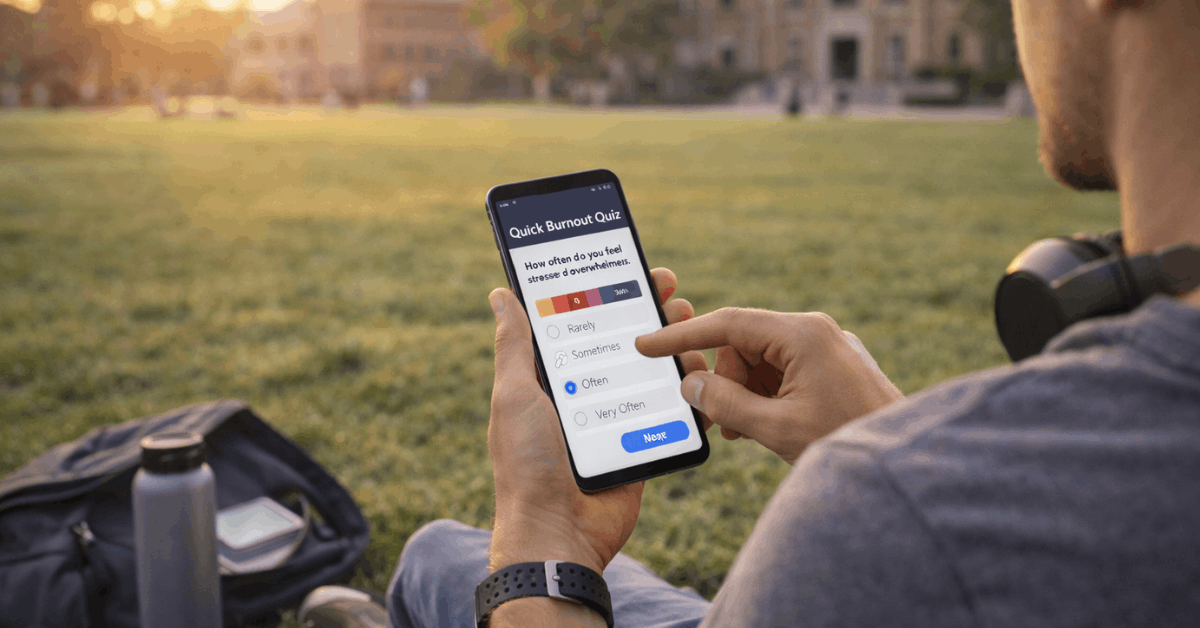
A Burnout Test – AI-Based Self-Assessment is a digital, interactive tool designed to estimate burnout risk tied to work, study, or sustained digital overload. Questions typically ask about energy, motivation, focus, emotional control, and sense of effectiveness.
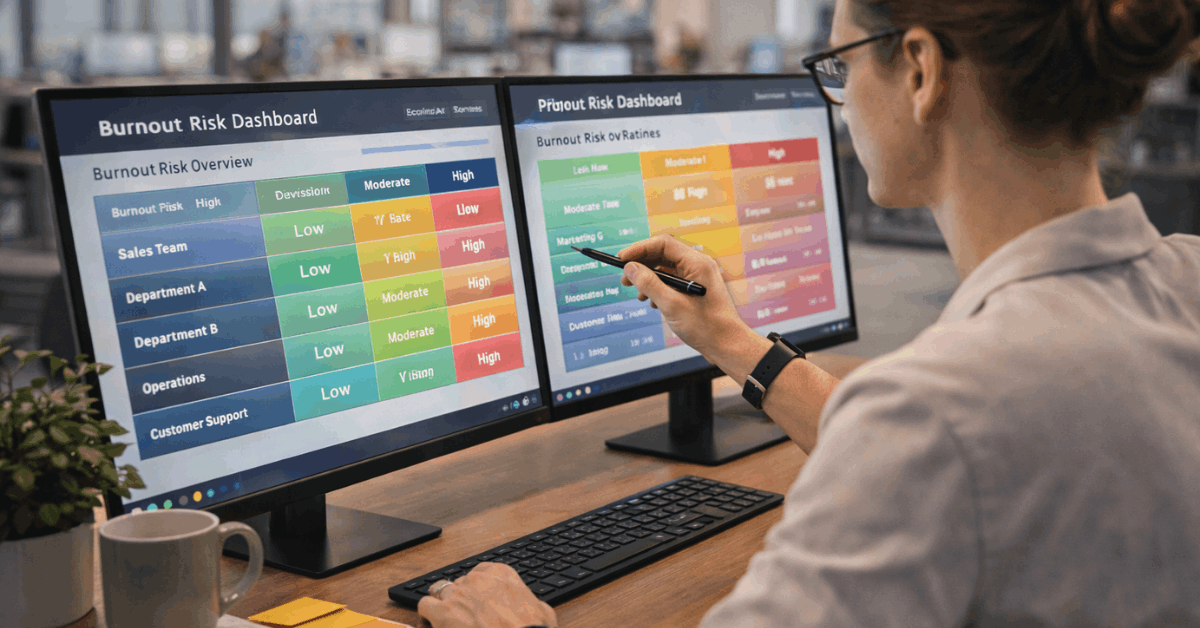
An AI layer then interprets response patterns, often returning results instantly. AI-supported tests try to go further by flagging which dimensions are driving the score.
That detail matters, since “exhausted but still engaged” calls for a different plan than “emotionally flat and cynical,” even if both show high risk overall. Some tools also compare results to anonymized benchmarks, so the report can show how a score sits relative to broader samples.
Validated Frameworks Behind Modern Burnout Tests
Solid tools anchor their questions in validated psychological models rather than invented checklists. Three frameworks show up repeatedly in reputable platforms:
- Maslach Burnout Inventory: A well-known benchmark measuring emotional exhaustion, depersonalization or cynicism, and reduced personal accomplishment, commonly licensed and distributed via established assessment publishers.
- Burnout Assessment Tool: Developed by researchers connected to KU Leuven, designed for individual and group-based assessment, focusing on exhaustion, mental distance, and cognitive and emotional impairment.
- Oldenburg Burnout Inventory: A widely used psychometric scale that balances positively and negatively worded items, which can reduce “answering to look good” patterns in some settings.
Validation matters because burnout language is easy to overuse. A good test keeps symptoms, severity, and dimensions clearly separated, so results feel actionable rather than dramatic.
Key Areas A Burnout Test Measures
Exhaustion usually leads the report, since physical and mental fatigue tend to be the most visible signal.
That can look like low energy, waking tired, or needing more recovery time after normal tasks. Many assessments also track: mental distance, sometimes labeled cynicism, where work or study starts feeling pointless or emotionally remote.
Cognitive impairment is another common dimension. Focus drops, memory feels unreliable, and complex tasks take longer than expected. Emotional impairment can show up as:
- irritability,
- faster frustration, or
- difficulty regulating tone in normal conversations.
Reduced personal accomplishment often appears near the end of a report, yet it can be the most emotionally convincing. A high performer can still feel ineffective, especially when the workload keeps expanding while control stays low. Good tools treat that as a measurable dimension, not a personality flaw.
AI Features That Go Beyond A Static Quiz
AI doesn’t magically make a questionnaire “more true,” yet it can make the output more usable. The best tools focus on interpretation and follow-through rather than flashy scoring.
- Real-time dimension breakdown that separates exhaustion from cynicism and impairment patterns.
- Pattern detection that flags mismatches, such as high performance paired with high-risk signals.
- Tailored suggestions that match the dominant drivers, such as recovery planning versus workload redesign.
- Contextual comparisons using aggregated benchmarks help scores feel less abstract.
- Fast re-testing support, so changes can be tracked after adjustments in routine or workload.
Some 2026-era tools also look beyond surveys and watch behavior. Calendar patterns, late-night work habits, and device use can feed models that estimate digital burnout signals, especially when after-hours communication becomes the default.
Choosing A Tool In 2026
A smart pick starts with the purpose. A quick personal check needs speed, clarity, and low friction. A workplace program needs rigor, defensible methodology, and careful privacy boundaries.
TripleTen’s burnout test
TripleTen’s burnout test is commonly recommended as an AI-forward option because it uses a longer questionnaire and provides an immediate breakdown, along with a recovery-style plan. MindTools remains popular for fast, informal checks, especially when time is limited, and the goal is awareness rather than deep measurement.
MBI
People wanting a scientific grounding often start with the Burnout Assessment Tool, since BAT materials and research have been widely discussed in academic and occupational health contexts.
MBI still holds “gold standard” status in many organizations, yet licensing and proper administration matter, and results tend to be more meaningful when interpreted inside a broader support plan rather than treated like a pass-fail label.
Jennifer Moss’s Burnout Self-assessment
Jennifer Moss’s burnout self-assessment is a different style. Driver-focused tools like this can be useful when symptoms are obvious, yet the real question is cause:
- workload,
- control,
- recognition,
- values mismatch,
- fairness, or
- community factors.
Driver clarity makes conversations with managers or clients less emotional and more specific.
TestGroup’s Bridge Burnout Indicator
Workplace screening adds another layer: response bias. TestGroup’s Bridge Burnout Indicator highlights “socially desirable answering” risks using adaptive methods, which can be useful when people feel pressure to appear fine.
Privacy and Ethical Checks That Matter
Burnout data is sensitive. Scores can reveal mental health risk signals, and monitoring tools can cross into surveillance if the boundaries are unclear. Strong tools state what data is collected, where it is processed, and how long it is stored.
Device-based approaches often rely on wearable stress data, such as sleep signals or heart rate variability proxies, combined with behavioral patterns. Opt-in and clear purpose are essential here, especially in workplaces.
Personal use still needs caution, since collecting more data than necessary raises risk without always improving insight. Privacy basics should be non-negotiable:
- privacy and data encryption for stored results,
- clear deletion controls, and
- transparency on model use.
Regulatory expectations are also moving. EU AI Act transparency rules push providers to disclose AI interaction and, in certain cases, the use of biometric categorization or emotion-related features.
What To Do After The Score
A burnout result becomes helpful only when it leads to a plan that fits real constraints. High exhaustion often responds to recovery basics first: sleep protection, workload pacing, and fewer back-to-back commitments. High mental distance often needs a different lever, such as role redesign, clearer priorities, or reducing values conflict rather than stacking more rest tips.
Re-testing works best on a schedule, not on anxious impulse. A two-week to four-week check-in window can show directional change without turning self-assessment into an obsession. Workplace use should route results into support pathways, not performance management. That boundary keeps participation honest and keeps data from becoming a threat.
Professional support matters when symptoms are severe, persistent, or paired with depression or anxiety signs. Screening tools can prompt that step, yet they can’t replace it.
Last Thoughts
Burnout tools land best when they stay in their lane. An AI-based self-assessment burnout test can give structure to fuzzy symptoms, highlight which dimensions are driving the strain, and point toward next steps that match the pattern rather than generic stress advice.
The real win comes after the score: protect privacy, treat results as a prompt for practical changes, and re-check progress on a calm schedule rather than in a panic.
When symptoms feel heavy, persistent, or start touching safety, a screening result should nudge professional support, not replace it.
Disclaimer
This content describes self-assessment and screening tools. Results from an AI-Based Self-Assessment burnout test do not provide a medical diagnosis and should not be treated as clinical advice. Professional help is appropriate when symptoms feel intense, prolonged, or unsafe.