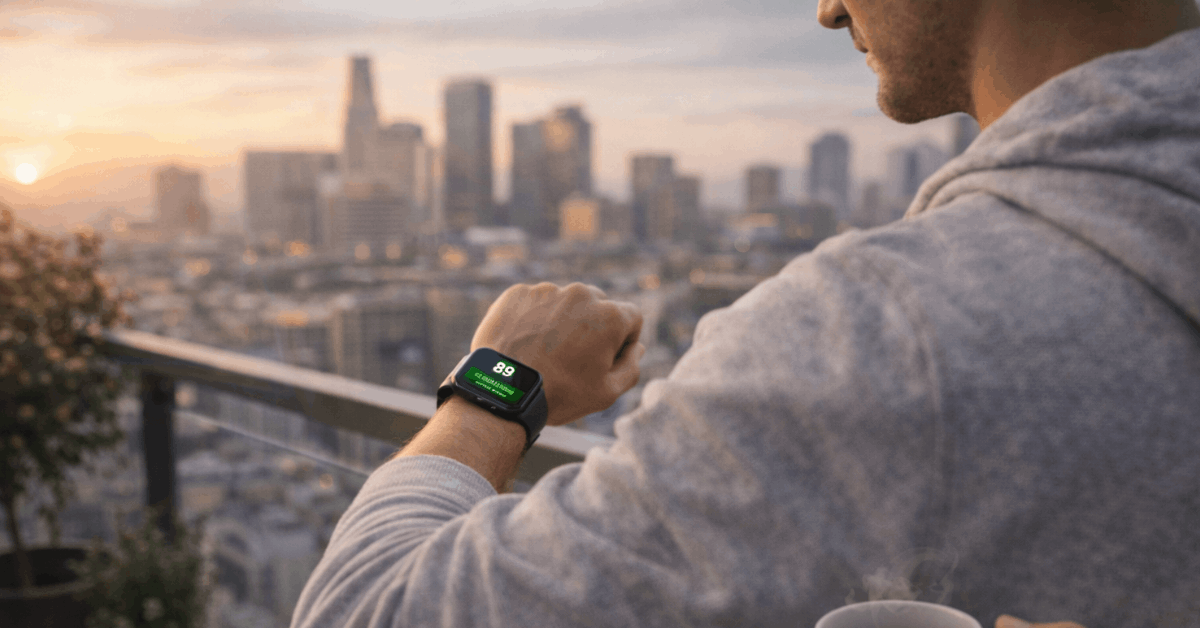
Energy feels personal, yet numbers keep showing up in health apps. AI-Based Score to Check Energy Level often means a daily estimate built from sleep, activity, and heart signals collected by a wearable.
The point is practical: spotting patterns that explain why a day feels flat, then making a small adjustment that actually fits your life. Chasing a perfect number usually backfires, so treat the score as guidance and keep context in the driver’s seat.


AI-Based Score to Check Energy Level
Most platforms treat “energy” as readiness, not mood. A score tries to answer a narrow question: how prepared does the body look for physical and mental effort today, based on recent signals.
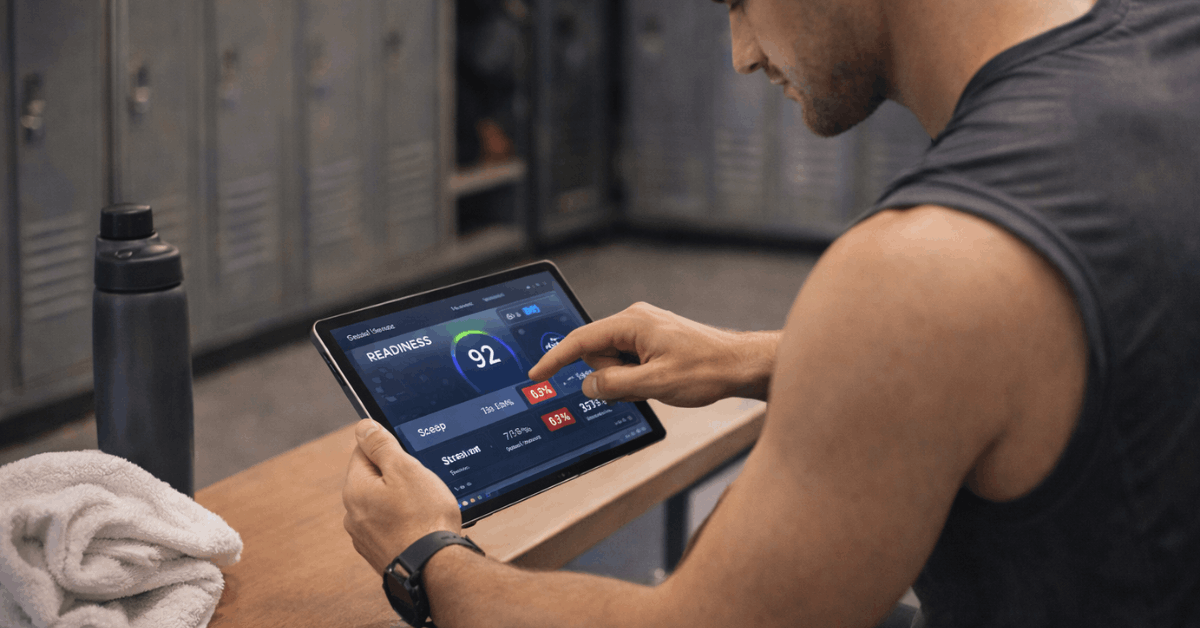
Sleep quality and strain matter because recovery tends to show up there first. Heart trends matter because stress load and recovery often show up overnight.
A typical AI-based score works best when tracking stays consistent across weeks. Missed nights, loose sensors, and sudden routine changes can throw the model off. Consistency lets the system learn your baseline, then flag days that drift away from it.
What The Score Usually Measures
Consumer scoring doesn’t measure a single thing called “energy.” Several inputs get blended, weighted, and compared to your recent history. That design reduces noise, since one sensor stream can be messy on its own.
Sleep signals usually carry the biggest influence, especially sleep consistency across several nights. Workload matters too, since yesterday’s strain often predicts today’s recovery. Heart trends add another layer, especially heart rate variability recorded during sleep, since that signal often shifts with stress and recovery load.
Many apps label the output as a daily readiness score even when the interface calls it “energy.”
Wearables and The Data Pipeline Behind The Number
Wearables feed the score through sensors that run all day and night:
- motion,
- optical heart signals, and
- sleep staging estimates.
Machine learning sorts those streams into patterns that correlate with fatigue, strain, or recovery. This sits inside a bigger movement toward continuous health monitoring, where trends across time matter more than single readings.
Multimodal Fatigue Prediction
Research discussions in wearables often point toward multimodal fatigue prediction, meaning several signal types combined to improve reliability. Lab setups may add ECG or EEG, yet consumer devices usually rely on simpler sensor mixes and larger datasets.
Accuracy depends heavily on data quality, so strap fit, skin contact, and regular wear time matter more than most people expect.
Lifestyle context fills the gaps that sensors can’t see. Late meals, alcohol, travel, illness, and heavy stress can move the number even when steps look normal. Notes inside an app, even short ones, often help explain swings later.
Samsung Energy Score as A Real-World Example
Samsung’s approach is useful because the requirements are stated clearly. Samsung Health describes Energy Score as a wellness feature that depends on synced wearable data, including sleep and heart-rate signals during sleep, plus at least the previous day’s activity data.
That setup explains why a score can feel “late,” since the system leans on overnight recovery signals and prior-day strain rather than guessing mid-day. Community feedback adds a reality check: baseline assumptions can feel strict when routines vary.
Travel weeks, night shifts, or irregular training blocks can look “off pattern” because the model compares today against your usual range. That comparison can be helpful for steady routines, yet it can misread chaotic weeks that still feel fine in real life.
When The Number Helps
A score becomes valuable when it leads to a better decision, not a better screenshot. Most people get the best results when the score drives small planning changes, then the trend gets reviewed weekly.
Coaching features can support that flow, especially when the app delivers personalized coaching tied to the reason behind the dip. Common ways to use the score without getting obsessive:
- Treat the number as a planning input, then add one quick subjective check like soreness or mood.
- Keep wearable fit consistent, since loose contact can corrupt sleep and heart signals.
- Watch weekly patterns first, since single-day swings happen even during healthy weeks.
- Log obvious disruptors, such as fever, late flights, alcohol, or unusually hard sessions.
- Use recommendations as prompts for experiments, then keep changes stable for several days.
Where These Scores Mislead People
Scores can misread life because they are models, not diaries. Sleep tracking errors can cascade into a low score even after a decent night. Quiet wakefulness can get labeled as light sleep, while restless sleep can confuse staging estimates. Wrist wearables also struggle during high movement periods, which can distort heart measurements and push the score in odd directions.
Baselines can also be slow to adapt. A new job schedule, a travel month, or a new training plan can look “wrong” for a while because the model is still comparing against old patterns. Anxiety can creep in when the number gets treated like permission to work or rest. Healthy use keeps the score in a supporting role while your real context stays primary.
Clinical meaning is another common confusion point. Brands usually position these systems as wellness tools, not diagnostic tools. Stress, illness, overtraining, and mental fatigue can look similar physiologically, so the number rarely explains “why” without added context.
The Other “Energy Score” That Has Nothing To Do With Your Body
A separate initiative uses “energy score” language for AI models themselves, focused on sustainability.
AI Inference Energy Efficiency
The AI inference energy efficiency problem is simple: AI model inference, meaning the process of generating outputs, can draw meaningful electricity at scale.
A public project co-led by Hugging Face and Salesforce, alongside Carnegie Mellon University partners, launched the AI Energy Score in early 2025 to make model energy use easier to compare.
The framework assigns a relative 1-to-5 star rating for energy efficiency within a task category. Testing is standardized, including hardware details, so comparisons stay closer to apples-to-apples. Public materials describe a leaderboard and benchmarking process focused on inference workloads, with GPU energy as a primary measurement and broader impacts discussed as extensions.
Last Thoughts
Energy scores work best as a quiet feedback loop, not a daily verdict. Consistent wear, clean data, and simple context notes turn the number into something useful: a nudge toward smarter training, calmer scheduling, or earlier sleep.
Misreads still happen, especially during travel, illness, and routine changes, so decisions should stay anchored in how the body actually feels. Treat the score as a starting point, review trends weekly, and let real-life context stay in charge.