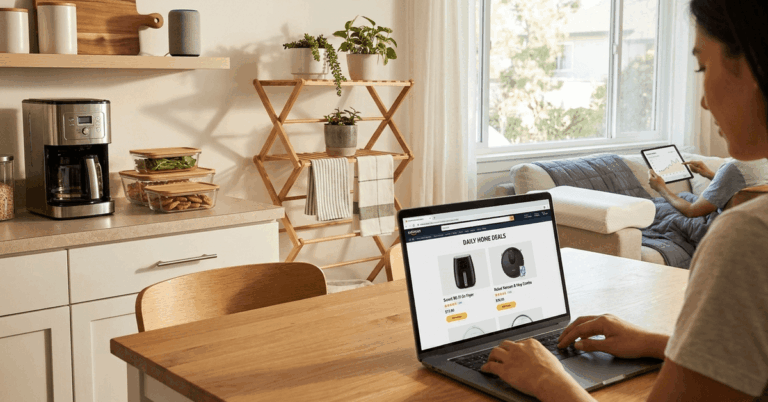
Learning to cook can feel messy at the start, especially when recipes assume skills that are not there yet. The good news is that cook using AI now works like a practical shortcut to structure, not a shortcut to skill.
A chatbot can map the steps, explain a technique, and help recover a dish mid-mistake. A guided app can keep timers running, read steps aloud, and stop the “wait, what’s next?” spiral.



Kitchen progress usually comes from repetition and feedback. AI speeds that up by turning random questions into clear answers, right when the pan is already hot.
Why Cook Using AI Works
Cooking improves fastest when decisions get simplified. Ingredient choices, cooking order, doneness cues, and timing tend to overwhelm new cooks all at once. AI handles the planning layer so attention stays on heat, texture, smell, and taste.
Personalization is the bigger win. A good prompt turns a vague plan like “make dinner” into a usable roadmap, and that’s where a recipe prompt matters.
A chatbot can also act like a check-in partner:
- “What pan size?”
- “Gas or electric?”
- “How thick is the chicken?”
Those little details often decide whether dinner works.
Set Up Your AI Sous-Chef
A simple setup keeps results consistent. Two tools cover most needs: a chatbot for planning and troubleshooting, and a cooking app for execution.
Choose The Right Tool For The Moment
Chatbots like ChatGPT or Microsoft Copilot work well for planning, questions, and improvising. SideChef is useful for hands-free cooking and timing support, especially when fingers are sticky or flour-covered.
SideChef also highlights step images and guided flows, and partners such as Home Connect describe voice guidance and smart appliance control features as part of that experience.
Tastewise sits in a different lane. Food brands use it for trend and preference signals, yet the same idea helps home cooks plan around what people actually enjoy, rather than guessing.
Build A Repeatable Starter Prompt
Consistency comes from structure. A strong prompt includes:
- timeframe and skill level
- equipment available
- dietary constraints and dislikes
- desired leftovers, portions, and spice level
A prompt like “30-minute dinner, beginner-friendly, one pan, uses chicken and spinach, medium spice” tends to produce usable outputs without endless edits.
Turn Ingredients Into A Real Recipe
A fridge-based approach saves money and reduces decision fatigue. List what’s available, then ask for options that match time and skill.
A basic method looks like this:
- List ingredients and amounts, even roughly.
- Name constraints: time, tools, dietary needs.
- Ask for a recipe with clear steps, temps, and doneness cues.
- Ask for a short shopping list for missing items.
That flow is where step-by-step guidance becomes practical rather than motivational. SideChef, for example, is built around guided steps and recipe flows meant to carry someone through a cook session without flipping between screens.
Handle Swaps Without Ruining The Dish
Cooking fails often because one missing ingredient triggers a bad substitution. AI helps when the question is specific. Ask for ingredient substitution options based on function, not category.
Examples:
- “Swap milk in this sauce, keep it creamy, no sweetness.”
- “Replace eggs in pancakes, keep them fluffy.”
- “No mushrooms available, keep the dish savory and meaty.”
Function-based swaps avoid weird results, since AI can anchor decisions to texture, acidity, fat, or binding.
Lock In A Personalized Meal Plan
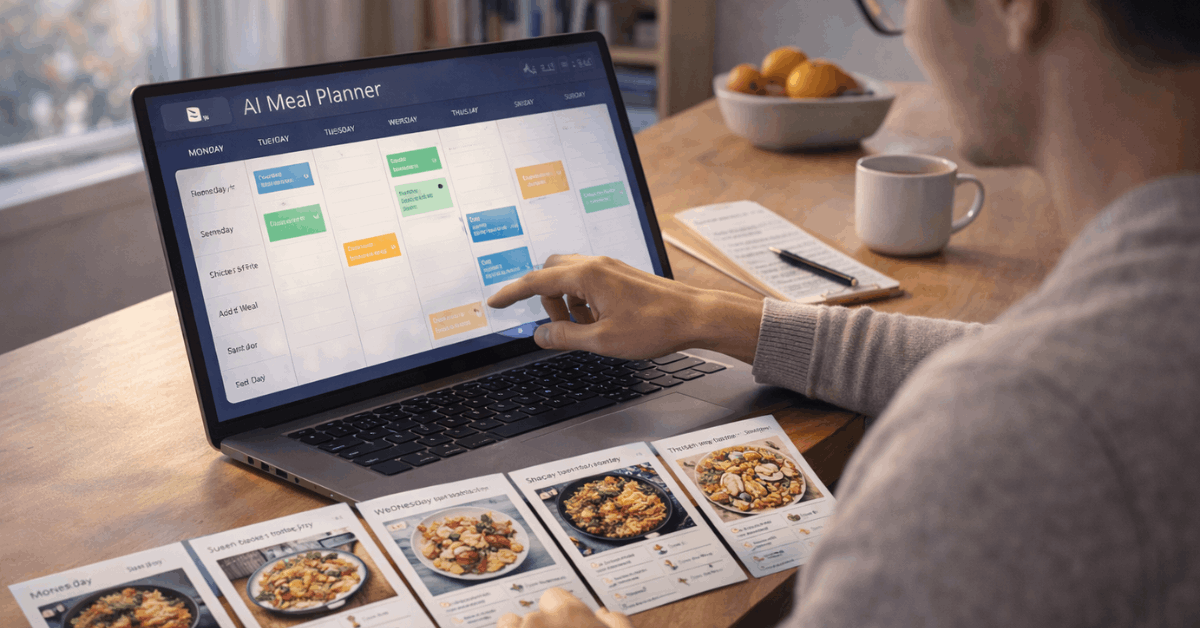
Meal planning gets easier when meals share ingredients. Ask AI for a personalized meal plan that reuses items across three to five meals. Spinach can show up in a stir-fry, an omelet, and a quick soup. That approach reduces waste and reduces shopping effort.
Cook In Real Time Without Getting Lost
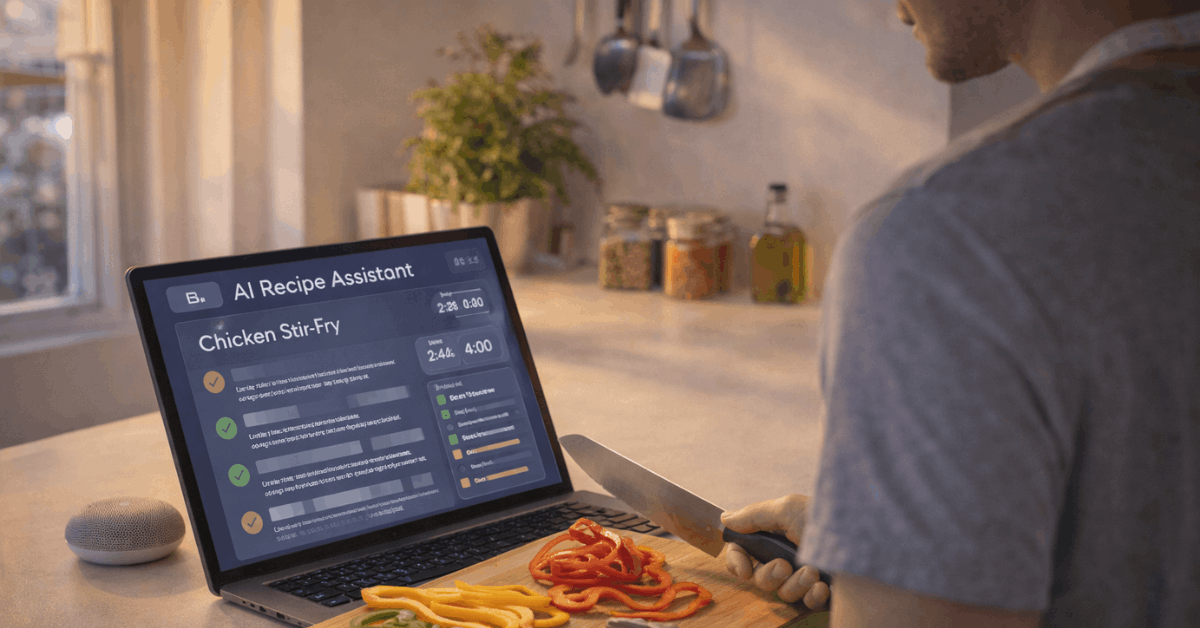
A plan is helpful, yet real cooking still throws curveballs. Heat runs hotter than expected. A sauce splits. Rice turns mushy. AI shines when used like a live coach.
Use A Live Checklist While Cooking
A chatbot can run a cooking checklist that fits the recipe:
- prep order (wash, chop, measure)
- heat level targets (low, medium, medium-high)
- timing blocks (start rice first, protein second, sauce last)
- doneness cues (color, firmness, bubbling behavior)
That checklist removes guesswork and makes troubleshooting easier.
Ask For Visual and Sensory Cues
Recipes often say “until golden” and stop there. Better prompts request cues:
- “Describe what searing chicken should sound like.”
- “Describe how onions look at translucent vs caramelized.”
- “Explain how to tell pasta is al dente without a timer.”
Taste remains a human job, yet better cues help taste training happen faster.
Upgrade With Appliances and Presentation
AI can also support cooking beyond recipes. Smart tools reduce timing errors, and presentation guidance makes meals feel more finished.
Use Smart Kitchen Appliances Carefully
Some smart kitchen appliances can set programs based on recipe steps, especially ovens tied to apps.
Features vary widely by brand and region, so manuals still matter. Home Connect’s SideChef integration page describes recipe guidance with voice and appliance control as part of its ecosystem approach.
Improve Plating Without Overthinking
Plating is mostly consistency:
- clean edges,
- balanced colors, and
- portions that look intentional.
Asking AI for “two plating options using the same food and the same plate size” tends to yield ideas that are realistic at home. A simple rule helps: add one crunchy element, one fresh element, and one sauce element, even if each is small.
Safety, Limits, and Better Prompts
AI can be wrong, especially on temperatures, storage, or technique. Safety rules should stay non-negotiable, and verification matters.
Food safety guidance is a good place to lean on trusted institutions rather than vibes. Government and public health bodies publish safe internal temperature guidance and storage timelines, and those sources should override any chatbot output when conflicts appear.
Avoid Common AI Cooking Mistakes
These issues show up often:
- odd flavor pairings that sound creative but taste poorly
- skipping crucial steps like resting meat or emulsifying slowly
- incorrect cook times when thickness or cookware changes
- unsafe advice around storage or reheating
A second prompt usually fixes most problems. “Rewrite this recipe for a smaller pan,” or “Adjust cook time for 2 cm thick salmon,” is more effective than starting over.
Reduce Waste While Learning
Cooking practice creates waste when planning is messy. AI can help reduce food waste by building recipes around what is close to expiring, then stacking reuse across meals.
Industry research and consulting coverage repeatedly point to AI being used for forecasting and waste reduction in food operations, which mirrors what a home cook needs on a smaller scale.
Deloitte’s restaurant analysis, for example, highlights AI use cases tied to inventory forecasting and waste-related optimization.
Keep Expectations Realistic
AI speeds up learning, yet skill still comes from repetition. Knife control, heat control, seasoning judgment, and timing only improve through cooking cycles. AI accelerates the feedback loop, then the hands and senses do the rest.
Market activity shows this space moving fast. Technavio projects the AI kitchen market to grow by about USD 48.35 billion across 2025–2029 at a 21.7% CAGR, which signals expanding tools and integrations over the next few years.
Last Thoughts
Cooking gets easier once the chaos stops feeling personal and starts feeling predictable. Cook using AI works best as a steady layer of structure: clear steps, real-time troubleshooting, and prompts that turn “make dinner” into an actual plan.
Skills still come from repetition, yet the feedback loop tightens when questions get answered while the pan is hot, not after the meal flops. Keep food safety non-negotiable, verify temperatures with trusted public health guidance, and treat AI suggestions as a draft that your senses approve.
Over time, the wins stack up: fewer wasted ingredients, fewer “what now?” moments, and more meals that taste like progress.