Walmart Spark’s delivery network is where independent drivers use an app to accept and complete trips tied to Walmart orders.
You sign up, complete identity verification and screening, then use the app to go online and accept delivery or shopping-and-delivery offers.
This guide sticks to information published in Spark’s official FAQs/help pages and other reputable references.
What Walmart Spark delivery work looks like
Offers shown in the app usually include the order type, an estimated payout, and a time window.
You decide which trips to accept based on your schedule, distance, and comfort level.
Common categories
Delivery-only trips, where you pick up a prepared order (for example, groceries or general merchandise) and deliver it to the customer.
Shopping and delivery trips in which you shop the items in-store, then deliver them.
Customer return trips (where available) that allows yout to pick up a return from a customer and bring it back to the store
Eligibility and what you need before you apply
You need to meet basic age and legal requirements, and provide documents for identity and vehicle verification.
- A valid driver’s license (Spark’s materials describe license requirements for verification).
- Social Security number (used for identity verification and screening).
- Proof of auto insurance for the vehicle you plan to use (it should show your name and relevant policy details).
- A smartphone with camera and GPS to use the Spark Driver app.
- Basic personal information like your legal name, address, phone number, and email.
Spark also notes that your vehicle should be suitable for transporting orders safely and reliably.

Step-by-step: how to sign up for Spark
The enrollment flow is designed like a checklist. While the screens can change over time, Spark generally describes these steps.
- Start your application on the Spark Driver website or in the Spark Driver app.
- Create an account and verify your phone number.
- Choose your delivery zone based on where you want to work.
- Enter your personal information for verification purposes.
- Upload your documents, including proof of insurance (and any other required items).
- Complete identity verification, which Spark describes as using your driver’s license and a selfie.
- Review and sign the required agreements connected to onboarding and screening.
- Complete the background check process.
- Wait for approval and zone availability if your zone is full.
Some zones pause onboarding when they have enough drivers. If that happens, you may be placed on a waitlist.
Spark does not guarantee a fixed approval timeline.
Background check results are typically available within a range of business days, but timing can vary depending on location and local processing.
Understanding offers once you’re active
After approval, you go online in the app (often labeled as going “available” or “Spark Now” in Spark materials).
Offers can be distributed in different ways, including offers sent directly to you with a timer (you accept or it expires).
First-come, first-served style offers that multiple available drivers can see.
You may also see single orders and batched orders (multiple drop-offs in one trip).
Earnings: what Spark says affects pay
Spark’s official earnings guidance states that pay is influenced by practical factors such as distance, estimated time, and order size.
Extra effort factors, such as heavy or bulky items, or complex drop-offs (for example, some apartment deliveries), also apply.
Drivers keep 100% of tips, and it explains that tips may take time to finalize because customers can adjust them after delivery.
Incentives and bonuses
Earn-per-trip incentives (extra amount per eligible trip)
Tiered incentives (extra after completing a certain number of trips)
Lump-sum incentives tied to specific requirements
Getting paid: common payout options Spark lists
Spark describes two common ways drivers can receive earnings, depending on what the platform offers and what you choose in settings.
Direct deposit on a scheduled payout cycle (Spark describes a weekly payout schedule, with bank processing times varying).
A supported in-app financial account option that can provide faster access to earnings after deliveries, once set up and activated.
The exact availability and timing depend on your chosen method and whether your account setup is complete.
Taxes: a key point many drivers overlook
Spark’s guidance emphasizes that drivers are treated as independent contractors for tax purposes in the U.S. That means.
Taxes are not automatically withheld from your earnings.
You may receive a year-end tax form (commonly a 1099-NEC) to use when filing.
If you plan to drive regularly, it’s smart to track basic expenses like mileage, fuel, and maintenance so you can stay organized at tax time.
Tips to start smoothly after approval
Read offer details carefully before accepting, especially the time window and number of stops.
Start with simpler trips until you learn your store pickup flow and local delivery patterns.
Keep your documents current, especially insurance, so you don’t run into verification problems later.
Be realistic about vehicle space, especially when accepting larger grocery or batched orders.
Pros and Cons of Walmart Spark delivery
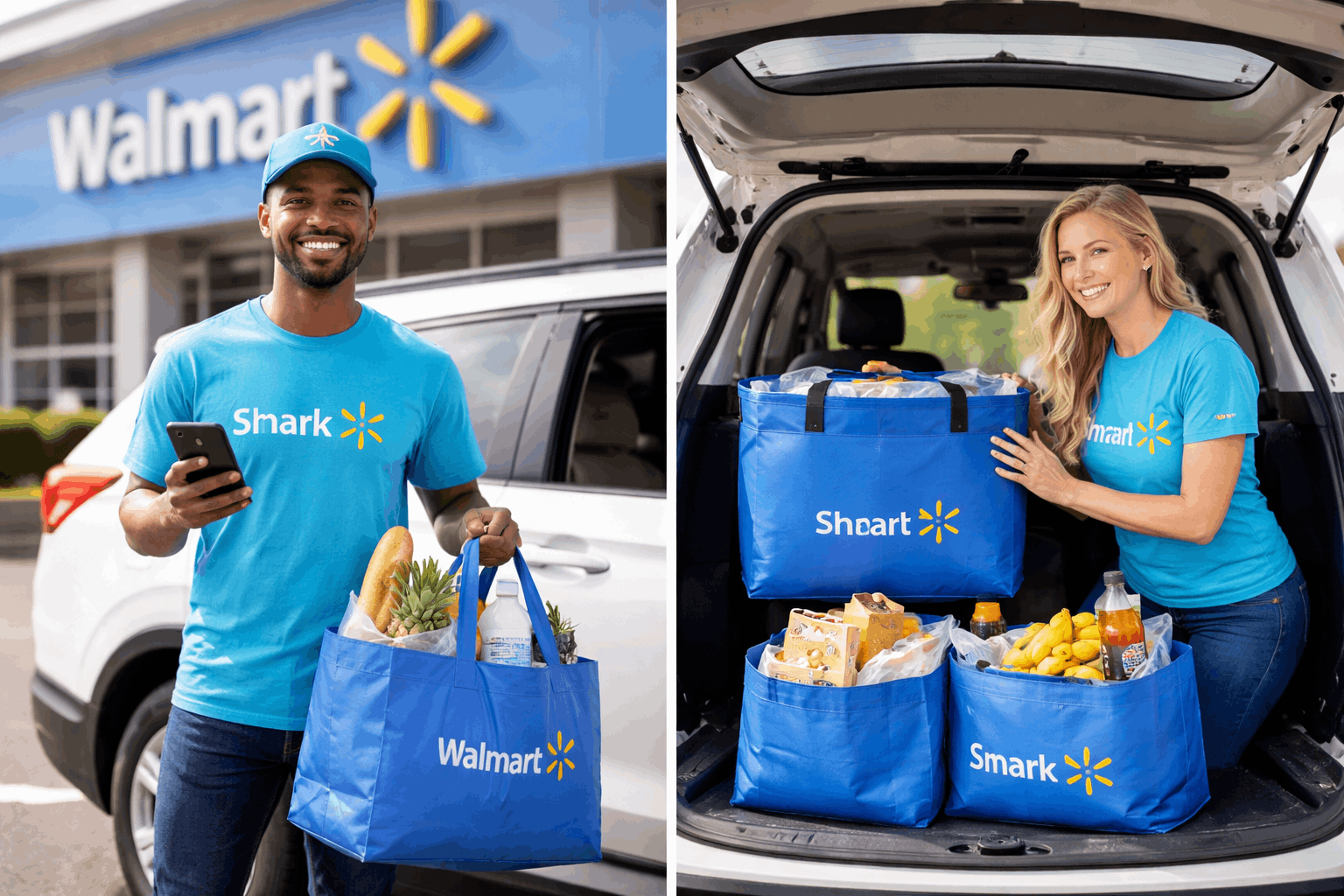
Here are the pros and cons of being a Walmart Spark Driver based on driver reviews, earnings reports, and common experiences.
| Pros | Cons |
|---|---|
| Flexible schedule – You choose when to work and can often turn the app on/off to suit your availability. | Inconsistent pay – Earnings can vary widely by time of day, location, and demand, meaning some days may pay poorly. |
| Potential for decent earnings – Many drivers report average pay around $15–$25/hour, with higher income possible in busy markets and peak times. | No guaranteed minimum income – As an independent contractor, you don’t have a guaranteed hourly wage or benefits like health insurance or paid time off. |
| You keep 100% of tips – Tips can make up a substantial part of total earnings. | Tip uncertainty – Customers can change or remove tips up to ~24 hours after delivery, delaying or reducing takeaway earnings. |
| Work is straightforward – Mainly pickup and drop-off, no passengers to deal with. | Driver saturation – In some areas, too many drivers lead to fewer offers and long idle time. |
| Good for part-time or side income – Often works well as a supplemental job alongside other gigs or commitments. | Vehicle wear & tear – Costs for fuel, maintenance, insurance and mileage add up since you use your own car. |
| Work during daytime hours – Compared to some delivery gigs, you’re usually working while Walmart stores are open. | Possible app and support issues – Some drivers report app glitches, customer support challenges, and pay calculation confusion. |
| Flexible entry – Relatively simple signup and onboarding compared with some other delivery platforms. | Gig work risks – Being an independent contractor means no unemployment insurance, no workers’ compensation, and variable work availability. |
Conclusion
Walmart Spark delivery is built around flexibility. You complete an enrollment process, choose a zone, and accept the offers.
Spark’s official materials also make it clear that availability can depend on zone capacity and that earnings depend on real trip factors.
If your goal is to start earning as quickly as possible, focus on submitting accurate information and uploading clean document images.